When One Book Becomes Three
Sometimes a story knows how large it needs to be before the author does.
When I began The Founders’ Light, I envisioned one novel telling the story of Alderhaven’s founding. It would begin with Jonas Albright, a Massachusetts schoolmaster troubled by questions of character, community, and the obligations we owe one another. It would follow the pamphlet he wrote, the families who encountered his questions, their journey west, and the creation of the town readers first met more than 170 years later.
It seemed perfectly reasonable.
Then the founders began becoming people.
The Albrights, Whitfields, Marches, and Steeles did not simply read Jonas’s pamphlet and agree with it. They questioned it. They argued with it. They tested its ideas against the circumstances of their own lives. Each family brought a different concern to the conversation, along with children who were often less willing than the adults to accept an incomplete answer.
Their stories needed room.
More importantly, I began to realize that the founding of Alderhaven was not one story. It was three.
The first is the story of people finding one another.
These families live in different places and face different problems. They are not searching for a new town to establish, and Jonas has not written a plan for one. He has written questions. Those questions travel farther than he expects and reach households whose members begin to wonder whether other people are troubled by the same things they are.
Letters follow. Then visits. Eventually, the families gather in Ohio, where a catastrophe forces them to stop discussing community and begin creating one. For a brief time, they share their labor, shelter, food, judgment, and care with people who need them.
Only afterward do they recognize what they have done.
That realization gives the first book its natural conclusion.
The second story is the journey west.
By then, the families have chosen one another, but choosing shared principles is easier than preserving them through hunger, exhaustion, grief, danger, and disagreement. The overland journey will test not only their endurance but the beliefs that brought them together.
Can people remain faithful to their chosen character when survival makes compromise tempting?
Their arrival in Oregon will not end that test. They must choose a place, build their first shelters, and decide what the land—and an unexpected discovery beneath it—will require of them.
The third story begins when survival is no longer their only concern.
Alderhaven must become more than a camp belonging to four families. The founders will meet the Delgados and discover that a community needs more than conscience, endurance, memory, and responsibility. It must also possess the warmth that allows strangers to become neighbors.
New people will arrive. Some will enlarge the settlement. Others may threaten what its founders are trying to protect.
The people of Alderhaven will have to decide how a community can preserve its character without demanding that everyone share the same history, customs, temperament, or way of seeing the world. They must learn the difference between welcoming individuality and excusing conduct that harms others.
That question may be the most important one Jonas’s pamphlet never knew it was asking.
So The Founders’ Light is becoming a trilogy.
The decision was not made because I wanted to stretch one story across three books. It was made because the story had revealed three distinct journeys: finding one another, crossing the country together, and building a community capable of welcoming those who came afterward.
Each deserves its own trials, discoveries, losses, laughter, and conclusion.
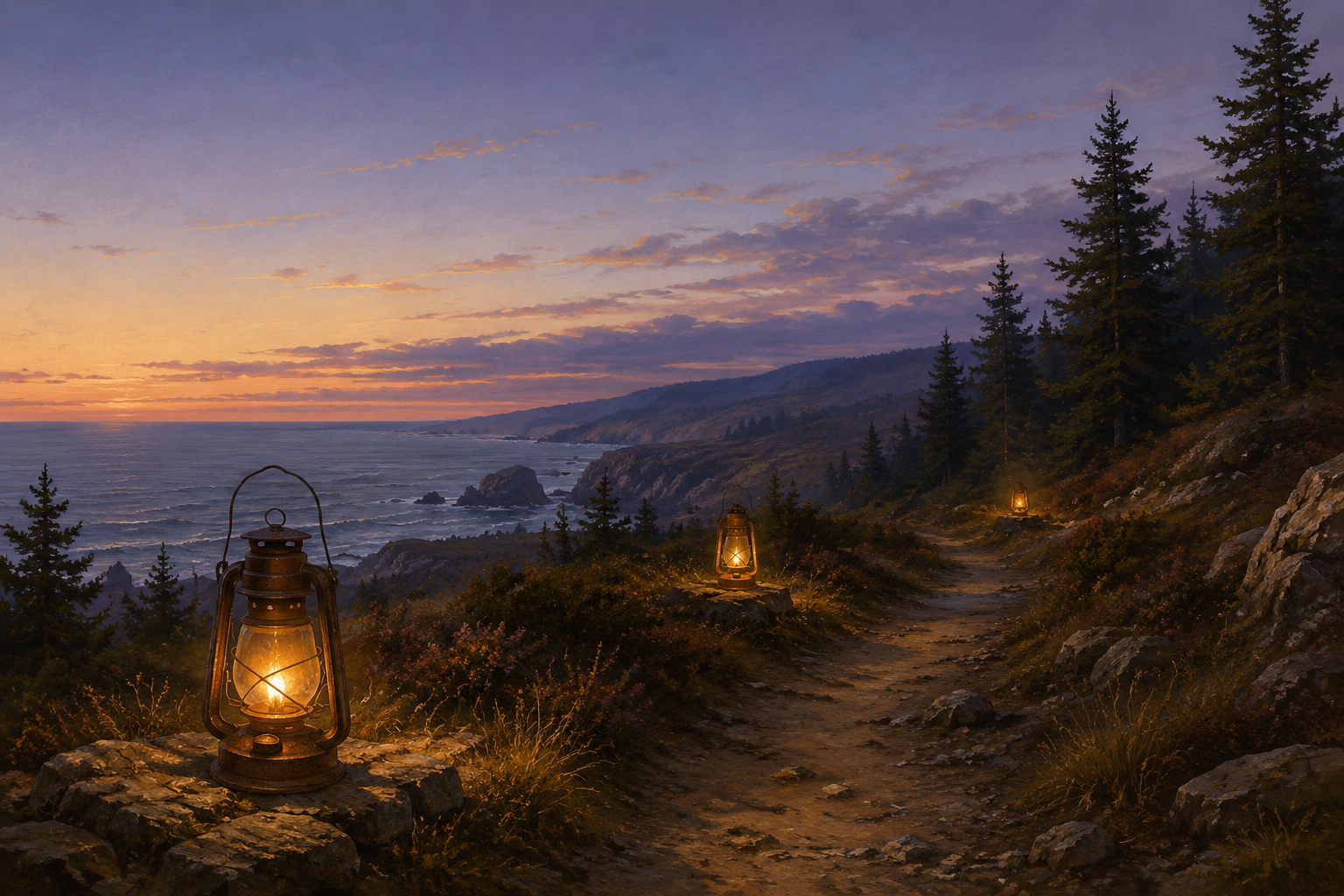
I have spent years walking through the Alderhaven these families created. Now I have the privilege of discovering, one lantern at a time, how they found the road that led them there.
And I would love your help with one question:
If you could ask Alderhaven’s founders anything, what would you want to know?
I’d love to hear your question. You can send it to me at info@megrydercozy.com. It may help me discover something about them—or about the town they created—that I have not yet thought to ask.